** Please Help **
I only need one card for a set that is approaching 10,000: a 1998 Bryan Braves (non-perforated) Kerry Ligtenberg.
Can anyone point me in the right direction?
I'm not currently selling anything, nor am I trading for anything other than the above card. I apologize, but there just isn't anything else I want/need.
-----------------------------------------------------------------------------------
What I collect:
1) One card of every major league player since August 28, 1977.
Where possible, I use single-player fully licensed major league cards sized 2½" x 3½" (or close) that don’t fall within one of the “oddball” exceptions described below. If no standard major league cards exist for a player, I turn to oddballs, then to certain license violators, and finally to minor, foreign or senior league cards.
Oddballs
Oddballs are divided into two groups.
The preferred oddball group—the first priority if no standard card exists for a player—are cards:
- that focus on a team, game or event more than the actual player (based on the whole card, like most Topps Now issues, or just the reverse, such as most Topps RTOD cards), or masquerade as a ticket;
- that focus on multiple players (but not more than nine);
- that identify the player primarily as a draft pick or signee;
- that are oversized (but with short sides not longer than 4 inches and long sides not longer than 5½ inches) or undersized (but with each side being no less than 2 inches);
- whose player photo is entirely in monochrome or black-and-white;
- that, for the primary identifying information of the player, misspell his name and/or identify him by a name other than what he used when he broke into the majors (or in late 1977 for players active at that time);
- that picture a player who had an extended retirement between the card’s issuance and the year the card represents in the set;
- that have a primary player photo which is clearly smaller than some other aspect of the front of the card;
- that identify the player as a major leaguer, and are permitted to use MLB logos/team names, but also identify the player as a member of a non-MLB team or league, or, in the main picture, appear, based on the totality of the card, to show the player in a Future's Game uniform or another non-MLB uniform; or
- that identify the player as a major leaguer, but are not permitted to (and do not) use MLB logos/team names, and show the player in a neutral uniform (generally meaning cards licensed by the MLBPA but not MLB Properties).
The next priority of oddballs are those with more than one of the characteristics of the “preferred” oddball group and/or are:
- game or contest cards;
- schedule cards;
- postcards;
- stickers, stamps and blank-backed cards;
- cards that identify the player by a name he never used;
- cards that identify the player as a major leaguer, but are not permitted to (and do not) use MLB logos/team names, and show the player in a uniform with non-MLB logos; and/or
- cards that show the player not in uniform.
License Violators
I exclude most cards that use team logos and/or team names without permission. But I’ll use license violators that are nationally (U.S. or Canada) issued and gain acceptance (such as 1976 SSPC) if no other major league cards were issued for a given player.
Card Release Years
Within each category of major league cards (standard, preferred oddball, non-preferred oddball, license violators), I prioritize by year. The first priority is a card from the player's debut year (or from 1977 from players who were active then). Then I go to the first cards issued after the player's debut year (or 1977), then to the last cards issued before the player's debut year (or 1977).
Minor/Foreign/Senior League Cards
If no major league cards were issued for a player, I’ll use a non-major league card, which must be licensed if licenses were required at the time of the card (i.e. minor league cards since 1987 and Japanese cards since 2000). Otherwise, the guidelines applicable to major league cards apply more loosely to minor/foreign/senior cards, and they are not prioritized by release year.
Last Options
If no other major, minor, foreign or senior league cards are available, I'll use oversized cards that contain neither statistics nor a clear and distinct designation of the year of the set (i.e. most postcards and team photocards).
Cards Outside the Scope of the Set
I ignore several categories of major league cards/items:
- Cards with any sides of less than 2 inches (not including frames), short sides of more than 4 inches, or long sides of more than 5½ inches;
- Tickets;
- Cards issued before or more than a year after the player’s professional or high-level amateur playing career, or otherwise as a retrospective;
- Cards with identified subjects of more than nine players;
- Cards that misidentify the subject as another player;
- 1/1s;
- Cutouts that are on newspaper stock or that are not intended to be cards.
2) One card of every player who had a WAR of 20 or better in games since 1947 and who retired before August 28, 1977.
Includes players who reached that threshold based on either fwar or bwar, and as hitter, pitcher or both.
No cards issued more than a year after the player’s professional playing career. All cards Ex-Mint or better. Any card size that is within the standard for the time. Must be licensed if issued after 1966.
3) One card representing every World Series winner since 1903 (and the two World Series that were not played).
All cards are in color and picture the winner or a significant contributor to the winner. All cards issued within the player’s career, or for team cards, in the year of or after the win.
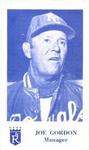
4) One card of every Kansas City Royals player and manager.
All cards show and identify the player or manager as a Royal and in a Royals uniform where possible, or, if not possible, one of those two elements.
Next option is a card with a Royals minor league team that uses the Royals name, and then one that doesn’t use the Royals name. Last option is a card with no Royals connection.
No tickets, team photocards or privately issued postcards.